
When Is Aftertreatment Required for Data Center Backup Generators - and How Do You Protect Backup Power Readiness?
Data centers are growing fast, while power is becoming harder to secure. The IEA projects that global data-center electricity consumption will more than double to around 945 TWh by 2030, and the U.S. EPA now provides a dedicated Clean Air Act resource hub for data centers covering air permitting, modeling, regulatory interpretation, and emergency-generator questions. For operators and project teams, that brings one issue much closer to the center of planning: how to meet emissions requirements without weakening confidence in standby power. (iea.org)
In mission-critical backup power, aftertreatment is not just a product choice. It is a decision about permitting, site design, testing, serviceability, operational parameters, and emergency power availability when the grid fails. In practical terms:
“Aftertreatment is required when the engine cannot meet the site’s emissions limits on its own.”
Davide Fedeli - Head of Mission Critical Business Unit
Why This Question Matters More Now
Backup generators may run only occasionally, but they now sit inside a much broader conversation about resilience, local air quality, and approvals. The IEA expects data-center electricity demand to keep rising sharply this decade, while the European Commission is advancing sustainability reporting and rating work for data centers in Europe. In parallel, outage costs remain severe: Uptime Institute reports that 54% of respondents said their most recent significant outage cost more than $100,000, and 16% said it cost more than $1 million. (iea.org)
In that environment, emissions compliance can no longer be treated as a late-stage checkbox. For many projects, it is already part of site planning, authority discussions, and risk management from the outset.
When Is Aftertreatment Required for Data Center Backup Generators?
The short answer is simple: aftertreatment is required when the engine alone cannot meet the emissions target that applies to the project. That trigger can come from NOx limits, particulate-matter limits, permit conditions, proximity to homes, schools, or hospitals, or from site expansion where additional power capacity must be balanced against stricter environmental requirements.
The challenge is that the answer is often site-specific. A generator package that is acceptable in one project may require additional aftertreatment in another because the local framework, authority interpretation, or emissions target is different. Two nearby sites can still face different limits.
When aftertreatment becomes more likely
| Project situation | Why aftertreatment becomes relevant | What the project team is really trying to solve |
|---|---|---|
| The engine does not meet site limits on its own | Raw engine emissions are too high for the approved target | Close the gap between engine-out emissions and permitted emissions |
| The site is near homes, schools, or hospitals | Local authorities may impose tighter conditions | Secure approval and reduce local air-quality concerns |
| Testing requirements are strict | The site must demonstrate low-emission operation during tests | Show compliance before an emergency event happens |
| The market is fragmented and locally interpreted | Local limits may go beyond the broad framework | Avoid redesigns, delays, and compliance surprises |
| The site is adding power capacity | Authorities may require emissions compensation | Expand without worsening the site’s emissions profile |
Why Emergency Generators Can Still Be an Emissions Problem
A common assumption is that emergency generators are not a serious emissions issue because they run only rarely. That is too simplistic.
EPA’s stationary-engine framework still distinguishes emergency operation from maintenance and testing, and EPA guidance for data centers explicitly highlights emergency-generator permitting and potential-to-emit questions. In other words, emergency status does not remove the emissions discussion; it changes how it is managed. (epa.gov)
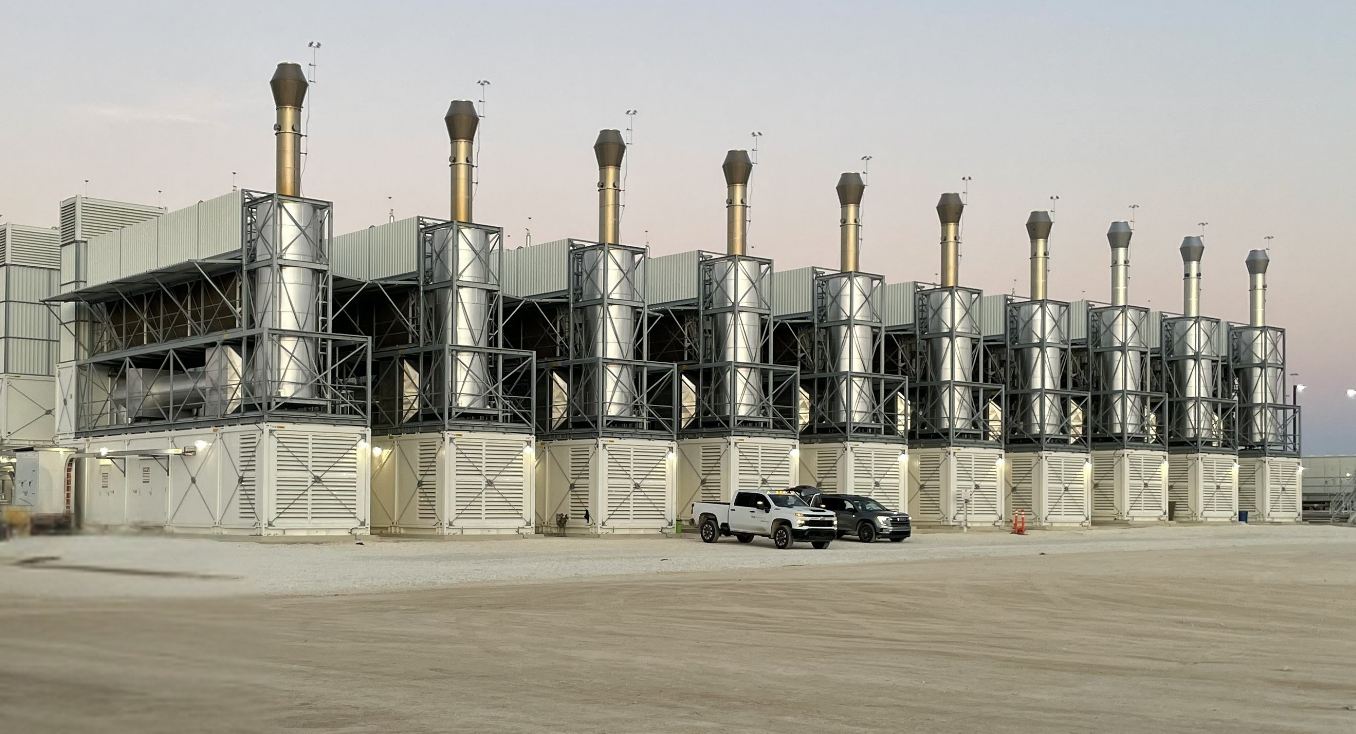
The practical point is easy to understand. Backup generators may run only a few hours per year, but when a wider blackout occurs, many generators can start at nearly the same time. That creates a concentrated local emissions event exactly when the surrounding community is already under stress. This is one reason testing matters so much: if a site can demonstrate low-emission operation during testing, it is in a stronger position when an emergency actually occurs.
“Backup generators either do not run or run only a few hours per year. But what if you have a blackout?”
Davide Fedeli - Head of Mission Critical Business Unit
How to Meet NOx Limits Without Reducing Backup Power Readiness
In mission-critical backup power, the goal is not only to reduce NOx. The goal is to reduce NOx without creating a new weak point in the emergency-power chain. Generators in this segment must start quickly, accept load fast, and remain available when called upon. That makes low backpressure, proper sizing, controls integration, and maintainability just as important as NOx conversion itself.
That is also why provider choice matters. In this market, the job is not simply to supply a catalyst. It is to design a system that fits the real engine limits, the site layout, the service-access requirements, the load profile, and the local emissions target. Teams usually feel the difference between a commodity approach and an experienced mission-critical approach when limits are strict, footprints are constrained, or the consequences of getting it wrong are severe.
What Are the Main Risks of Installing a DPF+SCR System?
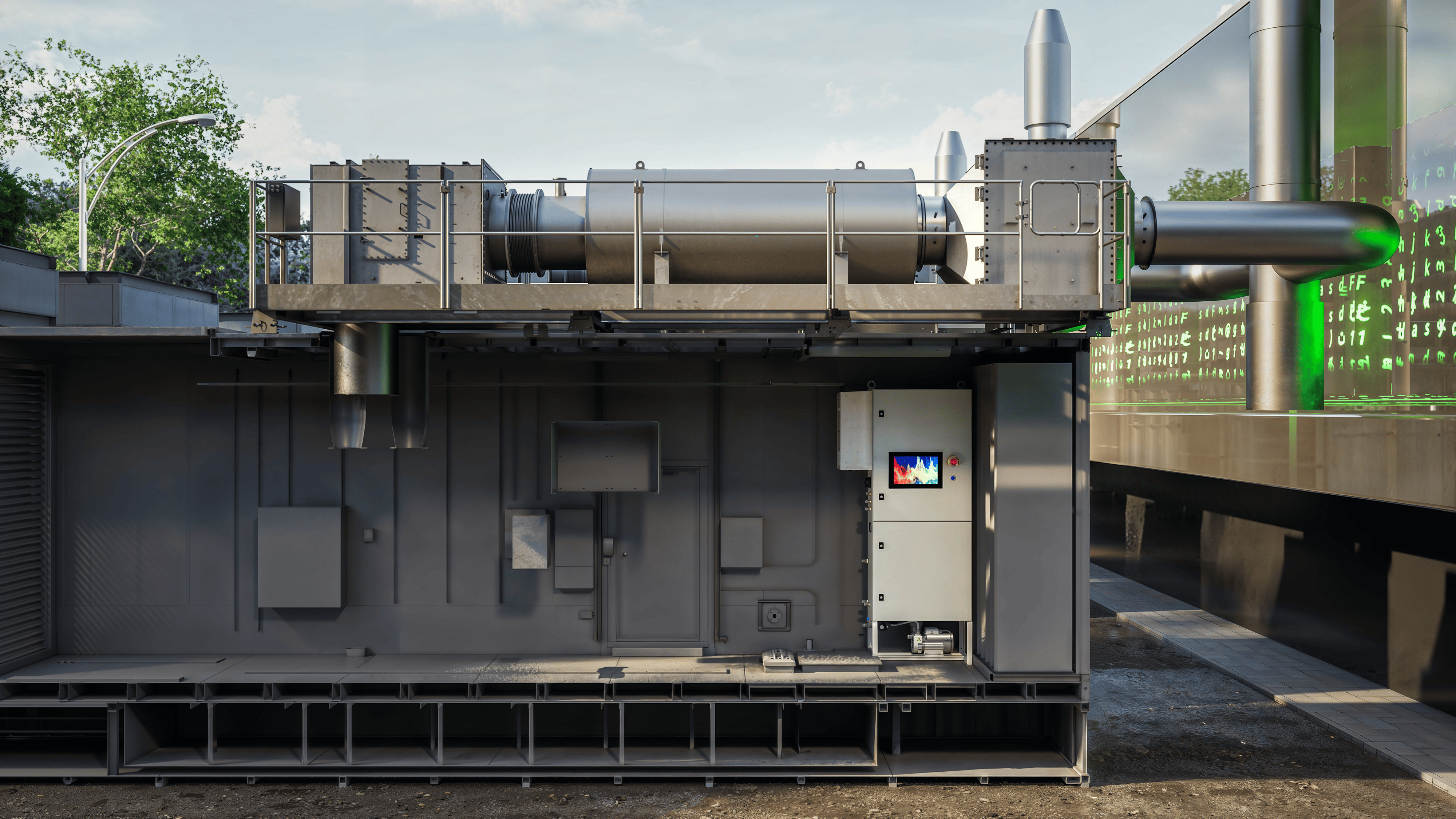
Combined DPF+SCR systems can be the right answer when both particulate matter and NOx must be reduced, but they bring more engineering and operating constraints than SCR alone. That is one reason provider experience matters so much in backup-power projects. The system must not only comply on paper; it must also remain physically installable, serviceable, and dependable under real standby conditions.
| Limitation | Why it matters |
|---|---|
| Backpressure | Can affect engine behavior and power delivery if not engineered correctly |
| Low-load operation | DPF can clog if load and temperature stay too low for too long |
| Footprint | Retrofit and engine-room layouts can be restrictive |
| Service access | Poor access makes maintenance harder and riskier |
| Maintenance discipline | DPF systems are less forgiving if maintenance is neglected |
This is exactly where an experienced provider becomes a risk-control measure, not just a vendor. In mission-critical work, the real difference is often not who can supply a reactor body, but who can manage backpressure, temperature boundaries, serviceability, and long-term operating behavior without putting generator availability at risk. That is the value of a deeply integrated approach backed by real project experience.
What Is the Minimum Reachable NOx Value?
There is no single universal answer that applies to every project. The achievable outlet value depends on the engine, exhaust temperature, duty cycle, local permit target, catalyst design, and control strategy. What matters in practice is not only the headline reduction percentage, but the guaranteed compliance point for the actual site. In high-performance applications, NOx reduction can reach up to 99%+, but the right number to communicate for a real project is the value tied to the permit, the engine, and the guaranteed operating condition.
New-Build vs. Retrofit: What Changes in a Data Center Aftertreatment Project?
A new-build is usually easier because the project team can plan for the aftertreatment system from the start. Space, routing, service clearances, controls, and access can all be built into the layout early. That makes it easier to design a solution that fits both the emissions target and the site.
A retrofit is different. The data center is already live. Access is tightly controlled. Security concerns are higher. The timetable is more sensitive. And operators often cannot afford to take more than one engine offline at a time. Retrofit costs are driven not only by equipment, but by the operational complexity of working inside a live data-center environment.
New-build vs. retrofit
| Topic | New-build | Retrofit |
|---|---|---|
| Space planning | Easier to plan from the start | Must fit into existing constraints |
| Installation complexity | Lower | Much higher |
| Site access | Simpler | Controlled and security-sensitive |
| Engine availability during work | More flexible | Often one engine at a time |
| Cost of site activity | Lower | Often much higher than new-build |
| Serviceability risk | Can be designed in properly | Easy to get wrong if access is not respected |
Details matter here. Problems do not only happen at the emissions level. They also happen when service space is not respected, sensors are hard to reach, injectors cannot be removed, or maintenance access was never properly designed in the first place.
How to Keep a Backup Generator Emissions System Compliant Over Time
Day-one compliance is not enough.
In many industrial applications, lifetime is discussed in operating hours. Backup-power reality is different. A system that runs only a few dozen hours per year may not age according to normal hour-based assumptions. It can still age because of time, humidity, temperature swings, and corrosion.
That shifts the better question from “How many hours will the catalyst last?” to a more useful one:
How do you keep the system compliant, healthy, and ready over five to ten years?
The practical answer is regular checks, maintenance discipline, service protocols, and documentation that give the operator confidence that the system remains compliant and in good condition over time.

What Data Center Operators, EPCs, and Packagers Should Ask Early
Before choosing an aftertreatment solution, project teams should ask:
Which engine is going to be used?
What are its exhaust gases physical and chemical values?
Which emissions limits apply to this site?
Are we solving for NOx, particulate matter, or both?
Under what operating condition is compliance demonstrated?
What happens during testing and readiness runs?
How is backpressure managed?
Is this a new-build or a retrofit?
How is service access protected?
What maintenance is expected over five to ten years?
What support is available after commissioning?
Those are the questions that move the discussion away from “Which device do we buy?” and toward the more important issue: which solution helps meet the limit, fit the site, and preserve confidence in standby power?
Aftertreatment Should Reduce Risk - Not Add It
That is exactly why the right aftertreatment partner is not simply the one who can supply a catalyst, but the one who can help solve the whole mission-critical challenge around it. At Hug Engineering, that means looking beyond emissions performance alone - to site constraints, backpressure, serviceability, long-term compliance, and the one requirement that matters most in backup power: when the generator is needed, it must be ready. In that context, aftertreatment should not introduce uncertainty. It should remove it. And that is where a deeply engineered, integrated approach makes the difference.
FAQ
Do data center backup generators need aftertreatment?
Not always. They need aftertreatment when the engine cannot meet the emissions limits that apply to the site on its own. That can be driven by NOx limits, particulate limits, permit conditions, or local air-quality sensitivity.
When is SCR required for a data center generator?
SCR is typically required when NOx limits cannot be met by the engine package alone. In many mission-critical projects, NOx is the main driver, which is why SCR is often central to the solution.
Do emergency generators still face emissions rules?
Yes. Emergency status does not remove all compliance obligations. EPA guidance for data centers and stationary engines still addresses permitting, potential-to-emit, testing, and related compliance questions for emergency generators. (epa.gov)
Why can two nearby data centers face different emissions limits?
Because local permitting and local authority interpretation can differ, even when sites are geographically close. In Europe especially, this can be a major source of project complexity.
Which regulations apply in Europe, Italy, Germany, Switzerland, and the Netherlands — and do emergency gensets always need aftertreatment?
Not automatically. The European baseline is the Medium Combustion Plant Directive, Directive (EU) 2015/2193, which covers medium combustion plants and is implemented nationally. The right public answer is not “yes, always” or “no, never,” but “it depends on the national implementation, plant size, operating profile, and the site permit.” (eur-lex.europa.eu)
Europe: The common backbone is the MCPD / Directive (EU) 2015/2193. It sets the broader framework for medium combustion plants, but the actual requirements that matter on a project are shaped by national implementation and site-level permitting. (eur-lex.europa.eu)
Germany: The key framework is the 44. BImSchV, Germany’s ordinance for medium-sized combustion, gas turbine, and internal combustion engine plants. It transposes the MCP Directive into national law and applies to medium-sized installations, including internal combustion engine plants. (gesetze-im-internet.de)
Switzerland: The core rule is the Luftreinhalte-Verordnung / Ordinance on Air Pollution Control (LRV/OAPC). Official federal text states that for emergency-generator gas turbines operated for no more than 50 hours per year, the authorities specify preventive emission limitation values. (fedlex.admin.ch)
Netherlands: The relevant framework sits under the Omgevingswet and the Besluit activiteiten leefomgeving (Bal). Official Dutch government guidance explains that combustion engines, including engines that are part of a generator set, fall under the rules for stookinstallaties, with permit obligations depending on installation type and fuel. (iplo.nl)
Italy: The Italian framework sits in Legislative Decree 152/2006 as amended by Legislative Decree 183/2017 and Legislative Decree 102/2020, which implemented the MCPD and define the rules for medium combustion plants. (gazzettaufficiale.it)
So, do emergency gensets always need aftertreatment? No. But once the applicable emission limits, permit conditions, local sensitivity, testing regime, or particulate requirements go beyond what the engine can achieve on its own, aftertreatment becomes the practical route to compliance. (eur-lex.europa.eu)
Temperature and startup behavior: what happens before the system is fully active?
Standby generators do not behave like continuous-duty engines. They start quickly, move through load changes fast, and may spend part of their operating life at very low run hours overall. That is why startup behavior matters so much in mission-critical aftertreatment design. The system has to be engineered around the real duty cycle of the generator, not around an ideal steady-state condition.
What exhaust temperature is needed before SCR starts working?
There is no single universal number that applies to every SCR system. The effective temperature window depends on the catalyst, control strategy, dosing logic, and engine/load profile. At very low load, the exhaust can be too cold for dosing to begin.
How long does it take after startup to reach NOx target levels?
There is no one fixed answer for every installation. The time to reach target NOx levels depends on engine startup behavior, exhaust temperature rise, load acceptance, catalyst volume, thermal insulation, and how quickly the system enters its effective operating window. In practice, the useful question is what performance is guaranteed for that engine, that load profile, and that emergency duty cycle.
Can SCR or DPF reduce noise?
Not as their primary function. SCR and DPF are emissions-control technologies. Noise reduction usually comes from acoustic integration such as silencers, enclosure design, and combined package engineering.
Can a malfunctioning aftertreatment system prevent a generator from running?
It can, depending on the failure mode. The clearest risks are excessive backpressure, DPF blockage, or a system configuration that interferes with engine availability at full load. A clogged DPF can prevent the engine from running, while a badly integrated system can create enough backpressure to reduce power delivery or force the generator offline.
Is aftertreatment harder on a retrofit project?
Usually yes. Retrofits are more constrained by live-site conditions, controlled access, tighter installation windows, and serviceability challenges.
How do you keep a backup generator emissions system compliant over time?
Through correct design, regular checks, maintenance discipline, and lifecycle support. In low-run-hour applications, aging is influenced not only by hours but also by time, humidity, temperature swings, and corrosion.