Engineering Emissions Compliance Around the Vessel: Meet Hug at SMM 2026
Every two years, the marine industry moves to Hamburg.
From 1-4 September, SMM will bring together more than 2,200 exhibitors and around 45,000 visitors from across the global maritime sector. For Hug Engineering, it has been a fixture in our calendar for as long as we can remember - and it remains one of the events we look forward to most.
Its importance is not only a matter of size. SMM is one of the few places where shipowners, shipyards, naval architects, engine manufacturers, classification societies, suppliers and technical experts are all part of the same conversation. Whatever challenge the industry is facing, the people who understand it are likely to be somewhere in the halls of Hamburg.
For us, SMM is an opportunity to present the latest developments in exhaust-gas aftertreatment. More importantly, it is a chance to make over 40 years of experience available to anyone facing a difficult emissions question.
Because those questions are rarely solved by selecting a product from a catalogue.
The emissions map keeps changing
The regulatory landscape continues to expand. On 1 March 2026, the Canadian Arctic and Norwegian Sea officially became Emission Control Areas for nitrogen oxides, sulphur oxides and particulate matter. The IMO has also adopted a new North-East Atlantic ECA, which is scheduled to take effect in 2028 and will extend stricter requirements across a large area covering waters around Greenland, Iceland, the Faroe Islands, Ireland, the United Kingdom, France, Spain and Portugal.
But the detail matters. Not every ECA regulates the same pollutants, and not every existing vessel suddenly requires a retrofit. Our guide to IMO Tier III compliance for workboats in real operations explains how operating area, vessel construction date, duty cycle and technical constraints shape the right approach.
What is clear is the direction of travel: more vessels will operate across different regulatory regimes during their working lives. Emissions compliance is therefore becoming an earlier and more strategic consideration - not only for legal operation, but also for tender eligibility, fleet flexibility, lifecycle cost and long-term vessel value.
Related article: Powering Compliance and Performance at Sea
Compliance has to work around the vessel
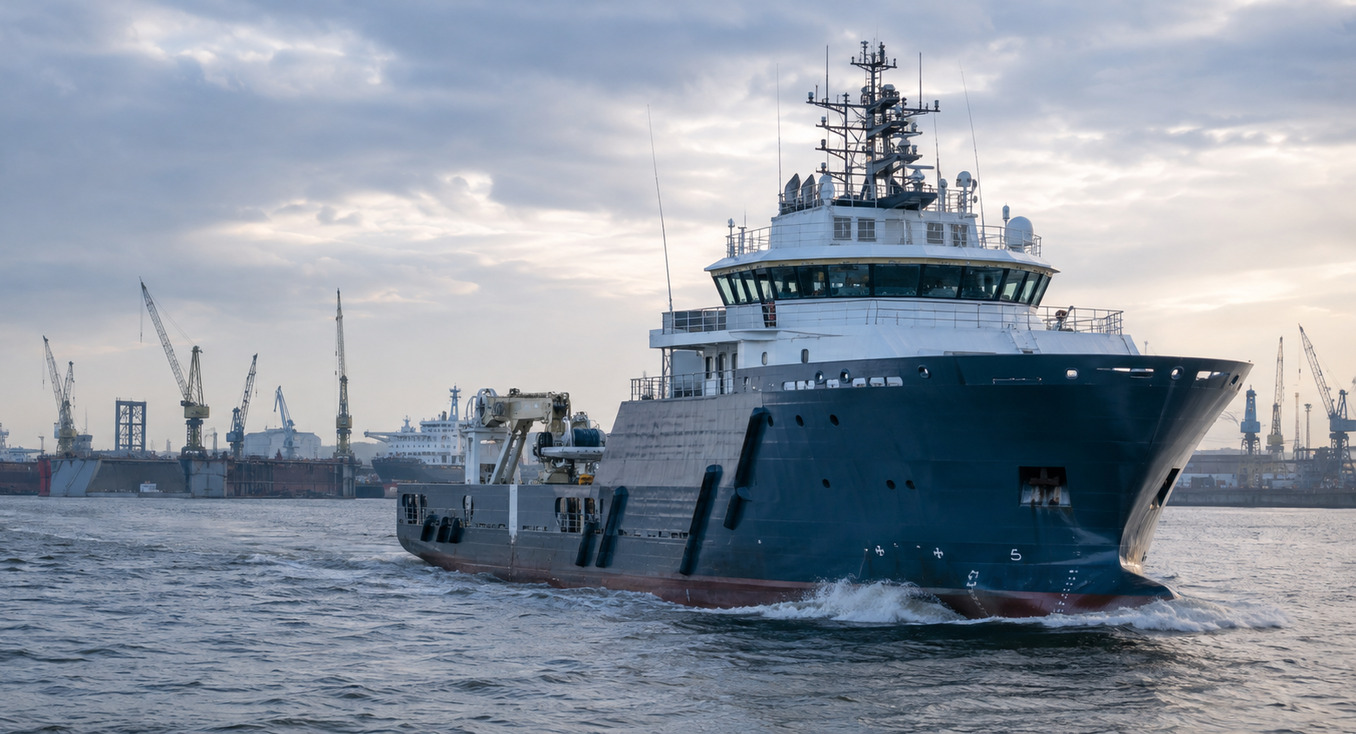
At SMM, we will present our Compact SCR technology for IMO Tier III applications, designed around the realities of newbuild and retrofit projects: limited engine-room space, sensitive backpressure limits, integration requirements and the need to preserve service access.
A compact, modular and switchable SCR system gives shipyards greater design freedom while helping operators avoid unnecessary urea consumption outside regulated areas. Low-backpressure architecture also matters far beyond commissioning: when an engine operates for thousands of hours, even a small difference in backpressure can influence fuel consumption and operating cost.
We will also place a strong focus on particulate reduction.
Depending on the application, a DPF can reduce particulate mass and particle number by up to 99%, addressing visible smoke, fine particles and black carbon. Hug Engineering's DPF technology is engineered for up to 10,000 hours of maintenance-free operation, with fully automated regeneration and extended service intervals.
Where both NOx and particulate emissions must be addressed, DPF, SCR and silencer technology can be combined in one integrated system. This creates a compact route toward demanding requirements such as EU Stage V or CARB At Berth without turning the aftertreatment system into the defining constraint of the vessel.
The right solution, however, always begins with the application: the engine, duty cycle, exhaust temperatures, available space, operating area, backpressure limits and maintenance concept. Our objective is not simply to deliver a system that passes certification. It is to engineer an answer that will still make sense after commissioning, when the vessel is back at work.
“Meeting an emissions limit is only one part of the job. The system also has to fit, remain serviceable and perform reliably across the vessel’s real duty cycle. Those are exactly the conversations we want to have at SMM.”
Peter Zijdemans - Head of Workboat Business Unit
Bring us the difficult project
Our team at SMM will include colleagues from sales and engineering, ready to discuss everything from early concepts and regulatory questions to detailed integration challenges.
Whether you are planning a new vessel, considering a retrofit, preparing for changing operating requirements or dealing with a project that has been difficult to solve, bring us the challenge.
Visit Hug Engineering at Booth A3.121 from 1-4 September 2026.
To arrange a meeting with our team in advance, contact:
Peter Zijdemans
Head of Workboat Business Unit
peter.zijdemans@hug-engineering.com
We look forward to continuing the conversation in Hamburg.